Material identity
Green tea extract is a preparation derived from Camellia sinensis leaves. Dried tea, processing fines and spent brewing residue have different starting compositions.
Green tea ingredients range from milled Camellia sinensis leaves to soluble tea extracts and selectively enriched catechin powders. Tea flavour, caffeine and the catechin profile matter in different ways: a drink needs a balanced cup, while a standardized extract needs a defined chemical composition. EGCG is one catechin, not another name for total polyphenols.[18][25]
A fine leaf powder remains a suspension when mixed into water. Extracting the leaf and removing tissue creates a different material; subsequent decaffeination or catechin fractionation changes it again. Select the form around the final product before choosing an extraction ratio or a high assay.[18][9][10]
Effects and human research
In foods, green tea supplies tea character and a measurable catechin fraction. Chemical radical-scavenging assays describe reactions in a test system; they do not measure disease prevention in people. The 2024 extraction experiment measured HPLC catechins and DPPH activity, not clinical outcomes.[18]
For weight management, the 2012 Cochrane review included 15 weight-loss studies and three maintenance studies, with 1,945 participants completing trials lasting 12–13 weeks. Six trials outside Japan, involving 532 participants, produced a pooled weight difference of −0.04 kg versus control (95% CI −0.5 to 0.4). Japanese trials were too heterogeneous to pool. The review found no clinically important weight-loss effect and no significant maintenance benefit; the observed weight differences were too small to be clinically important.[15]
Concentrated extracts also have a different exposure pattern from ordinary infusions. EFSA’s 2018 assessment found increased serum transaminases in intervention trials at supplemental intakes of 800 mg EGCG/day or more. EFSA could not identify a safe EGCG dose for green tea extracts. EGCG per serving, caffeine and intended daily consumption should be defined before supplement development.[25]
Material forms and composition
Total polyphenols, individual catechins (including EGCG) and caffeine are separate measurements.
| Form | What it contains | Best starting point |
|---|---|---|
| Milled leaf powder | Leaf tissue plus native soluble constituents; particle size affects the cup. | Opaque tea lattes or foods where leaf colour and texture are acceptable. |
| Broad water-extract powder | Soluble tea solids after tissue separation; may include a drying carrier.[18] | Instant tea and ready-to-drink tea; assess cold-water clarity and flavour. |
| Decaffeinated tea or extract | A selectively processed material; low caffeine is distinct from high EGCG.[9][10] | Lower-caffeine drinks or ingredient preparations with an assayed caffeine target. |
| Catechin-enriched / high-EGCG powder | A fractionated composition, not concentrated ordinary tea by definition.[9] | Defined solid-dose development; compare EGCG, other catechins, caffeine and carrier. |
Application selection
Beverages, protein systems and oral solid development.
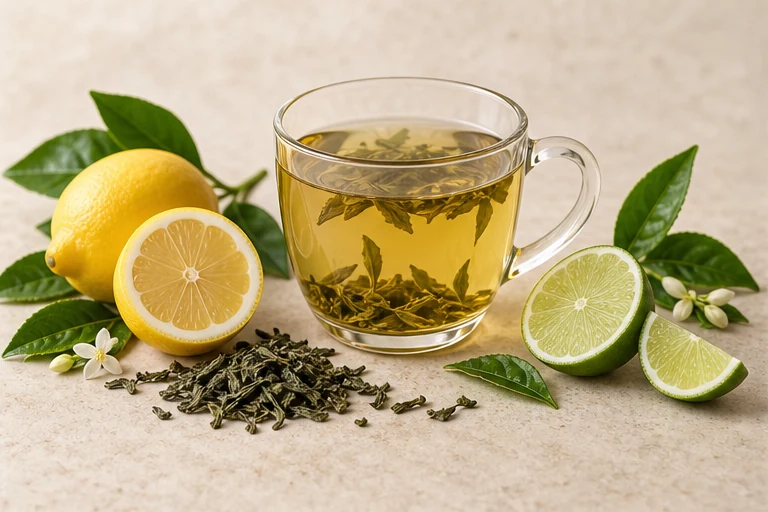
- Citrus green tea beverage · Pair a beverage-grade water extract with citrus flavour, a permitted acidulant and the selected sweetening system
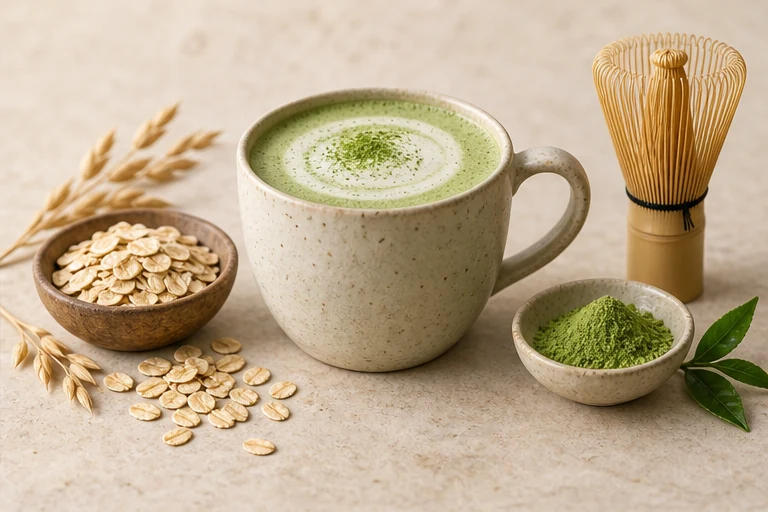
- Green tea oat latte · Pair fine leaf powder or a flavour-led extract with oat base and optional vanilla
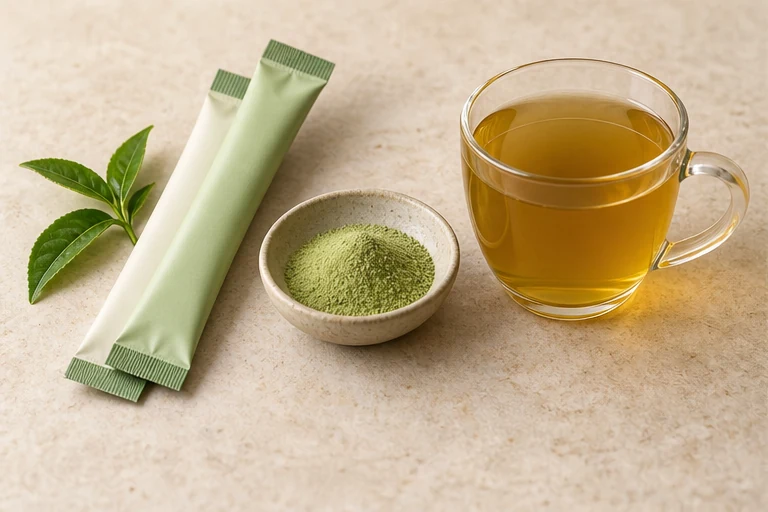
- Instant tea stick pack · Pair a soluble tea extract with a documented soluble carrier or a compatible granulated base, plus optional lemon flavour
End-product selection
Ready-to-drink tea, instant drink powders, capsules and tablets.
Beverages, protein systems and oral solid development.
Three product development plans
These pilot-development concepts set out ingredient roles, addition order and test points. Establish flavour and analytical targets in the intended product matrix.
Citrus green tea beverage
Pair a beverage-grade water extract with citrus flavour, a permitted acidulant and the selected sweetening system. Tea supplies the main flavour and catechins; citrus supplies aroma, while acidity and sweetness balance the cup. Use a clarity-qualified extract rather than leaf powder.
Dissolve the tea extract in a portion of treated water, inspect and filter if required, then blend with the dissolved sweetener. Add diluted acid gradually under mixing; add flavour at the stage suited to its heat tolerance. Evaluate the full beverage through the intended heat treatment and filling process.
Measure cold haze, sediment, colour and catechin retention together with sourness, bitterness and astringency. Include the actual water mineral profile and an oxygen/light packaging comparison. EFSA discusses catechin sensitivity to pH and processing; a clear fresh sample is not a shelf-life result.[25]
Green tea oat latte
Pair fine leaf powder or a flavour-led extract with oat base and optional vanilla. The oat base provides body; the tea form sets green colour, tea intensity and suspended solids. An EGCG-rich isolate is not a like-for-like substitute for a leaf-flavour ingredient.
Prepare the oat base first. Make a smooth tea slurry with a small portion of the base before adding it to the main vessel; disperse under controlled shear, then use the beverage’s chosen homogenization and heat process. For soluble extract, dissolve separately instead of applying the leaf-powder slurry procedure automatically.
Check sandy texture, sediment redispersibility, heat-induced flocculation and flavour after storage. Run matched base controls at the actual protein, salt and pH levels. Tea polyphenol–protein interactions are described in the EFSA assessment; the effect in a chosen oat base still needs direct measurement.[25]
Instant tea stick pack
Pair a soluble tea extract with a documented soluble carrier or a compatible granulated base, plus optional lemon flavour. The carrier supports handling and distribution; it must be included in the supplied-powder assay and serving calculation.
Sieve compatible powders, prepare a low-dose flavour/tea premix, then expand into the bulk blend. Evaluate agglomeration only if wetting or segregation remains poor. Fill moisture-barrier stick packs after checking blend uniformity.
Fix water temperature, water volume and stirring when measuring dissolution, foam and cup sediment. Repeat after humid storage, and measure caking, aroma loss and caffeine/EGCG per pack.
Processing and equipment
For a tea-like drink, investigate aqueous extraction and clarification with flavour and catechin retention. A catechin-enriched capsule requires separate selective enrichment and caffeine/exposure review; evaporating more water does not establish that profile.[1] [2]
For a flavour-led water extract, the practical sequence is controlled milling, wetting and extraction, tissue separation, clarification, concentration and drying or liquid standardization. A mill opens tissue; a filter or centrifuge removes it. Clarification reduces suspended material but does not selectively remove dissolved caffeine. An evaporator removes water, not caffeine from the dry solids.[18][9]
For catechin enrichment, establish a catechin and caffeine mass balance around the adsorption step. Measure feed, load-through, wash and eluate separately. A narrow collection window can improve assay while lowering recovery. Column choice therefore depends on selective retention, regeneration and extract quality, not simply bed size. The Hauser patent illustrates adsorption of catechins while caffeine leaves in the wash.[9]
For decaffeinated leaf products, a different route can recover tea solubles into water, adsorb caffeine on activated carbon and return the treated extract to the extracted leaves before drying. This preserves a leaf product rather than manufacturing an isolated EGCG powder. Carbon treatment needs simultaneous caffeine-removal and non-caffeine-solids-retention checks.[10]
During concentration and drying, trend individual catechins, colour and caffeine on a consistent dry basis. If EGCG decreases, examine related isomer peaks rather than attributing every loss to oxidation. Shorter warm holding, controlled air exposure and protective packaging are factors to screen; a laboratory freeze-dryer does not establish the economics or performance of spray drying.[18][25]
Quality and safety
Specify species, leaf or processing-fines origin, prior brewing history, extraction solvent and carrier. Report total catechins by a defined method, individual EGCG and caffeine, and whether values refer to dry or as-supplied material. A total-polyphenol colour test and the sum of HPLC catechin peaks are different measurements.[18][25]
For release testing, combine the chemical profile with microbial quality, relevant pesticides, elemental contaminants, moisture and solvent residues where applicable. Beverage grades also need a defined reconstitution and storage test. Supplements need composition-specific exposure and labelling assessment: removing caffeine does not remove the EGCG-related safety question.[25]
Buy this ingredient: specifications, COA, certification documents & pricing →
Practical questions
Does a total-polyphenol assay measure EGCG?
It measures assay-defined equivalents. Use a chromatographic catechin profile with a separate caffeine result to describe a concentrated tea ingredient.[18][25]
Research cases
The 2024 study used dried Guiding Niaowang processing waste from Guizhou, with granular and fluffy fines, milled through a 0.425 mm screen. It was not already-brewed tea residue. Hot-water and ultrasound-assisted extraction ran at 80°C for 20 minutes; ultrasound used 20 kHz and 120 W. The ethanol arm used 80% ethanol at a reported 70°C for 20 minutes. Sample-to-solvent ratios were 1:100, 1:50 and 1:20 w/v.[18]
At 1:50, extract yields were 25.98 ± 0.75% for hot water, 24.16 ± 0.95% for ultrasound and 22.59 ± 0.26% for ethanol. Hot water gave the highest extract yield at this ratio. The study reports ethanol extraction at 70°C and ultrasound power of 120 W; production-scale comparison would require batch mass and energy input per unit feed.[18]
Relevant patents
WO2001056586A1
PCT application publication (A1). Original applicant/assignee: Hauser Inc. Priority / filing / publication: 1999-01-07 / 2000-02-01 / 2001-08-09.[9]
Published claim 1 extracts catechins into a solvent, loads the crude extract onto an adsorbent, washes out caffeine while catechins remain retained, then desorbs catechins. Dependent claims identify polyamide, ethanol/water fractions and further C18 purification; claim 15 specifies green tea leaves. The disclosed high-EGCG isolation includes solvent exchange and crystallization, not merely evaporation.[9]
This family is relevant to standardized catechin ingredients and the recovery–purity trade-off. The methanol-containing isolation details are manufacturing disclosures, not food-formulation instructions; solvent suitability and removal require separate controls.[9]
WO2015144495A1
PCT application publication (A1). Original applicant/assignee: Infre Sa. Priority / filing / publication: 2014-03-26 / 2015-03-17 / 2015-10-01.[10]
Published claim 1 uses water below 70°C to extract leaves, separates liquid and leaves, reversibly adsorbs caffeine on active carbon, then contacts the decaffeinated extract with the extracted leaves and dries the product. Further claims address the carbon, centrifugal separation and an integrated system. Claim 16 includes green tea.[10]
Here caffeine is retained by the adsorbent and the treated tea liquid returns to the leaves. In the Hauser route, catechins are retained and subsequently recovered. These opposite separation duties explain why the two patent families are not interchangeable process recipes.[9][10]
References
- WO2001056586A1 - Method for the isolation of caffeine-free catechins from green tea · 2026-09-11
- WO2015144495A1 - Decaffeination methods and systems · 2026-09-11
- Green tea for weight loss and weight maintenance in overweight or obese adults | Cochrane · 2026-09-11
- Green tea extraction primary full text · 2026-09-11
- EFSA 2018 green tea catechins safety full text · 2026-09-11
Material and processing background sources
- Green tea waste extraction comparison (2024) · 2026-09-09
- Commission Regulation (EU) 2022/2340 · 2026-09-09
Related products and technical resources
Green Tea Extract
Specifications, samples and supply terms →
Application developmentFrom ingredient to end product
Formulation fit and testing priorities →
Related constituent family: definitions & assay boundaries →